
- Home
- Investing
- Economy
The December CPI report came in lighter than expected, but housing costs remain an overhang.
 By
Karee Venema
published
13 January 2026
in News
By
Karee Venema
published
13 January 2026
in News
When you purchase through links on our site, we may earn an affiliate commission. Here’s how it works.
Share Share by:- Copy link
- X

The latest Consumer Price Index (CPI) report showed inflation is holding steady, though key areas such as shelter, food and energy saw prices rise. The data will likely keep the Federal Reserve sidelined at its January meeting, with the central bank all but guaranteed to keep interest rates unchanged.
According to the Bureau of Labor Statistics, headline CPI was up 0.3% from November to December, faster than the 0.2% rise seen the month prior and arriving in line with economists' expectations.
The CPI was 2.7% higher year over year, matching November's increase and economists' estimates.
From just $107.88 $24.99 for Kiplinger Personal Finance
Become a smarter, better informed investor. Subscribe from just $107.88 $24.99, plus get up to 4 Special Issues
CLICK FOR FREE ISSUE
Sign up for Kiplinger’s Free Newsletters
Profit and prosper with the best of expert advice on investing, taxes, retirement, personal finance and more - straight to your e-mail.
Profit and prosper with the best of expert advice - straight to your e-mail.
Sign upShelter was the largest factor behind the monthly increase in headline CPI, according to the BLS, rising 0.4% from November to December. Food and energy costs were also up.
Other areas that saw price increases included airfare and hospital services, while used cars and trucks and household furnishings saw prices edge down.
Core CPI, which excludes volatile food and energy prices and is considered a more accurate measure of underlying inflation trends, increased 0.2% month over month and rose 2.6% compared to year prior, matching what was seen in November and coming in below expectations.
"Economists were worried about some statistical resets after the government shutdown, but the bigger disinflation trend continued," says David Russell, global head of market strategy at TradeStation.
Russell adds that the report is good news for those worried about inflation reaccelerating. And while the December CPI "probably won't have much influence on Fed policy given the coming change in leadership ... it keeps expectations on track for lower rates and likely supports risk appetite."
Indeed, rate-cut expectations are little changed following this morning's inflation data. According to CME FedWatch, futures traders are pricing in a 95% chance the Fed will keep the federal funds rate unchanged at its January meeting, down from 95.6% one day ago. The first quarter-point rate cut isn't expected until June, with a total of two priced in for the year.
That said, with the December CPI data now in the books, here's some of what economists, strategists and other experts around Wall Street have to say about the results and what they could mean for the Fed and investors going forward.
Experts' takes on the December CPI report

"By most accounts, inflation is unlikely to drop to the 2% target in 2026, although it may gravitate towards that target, assuming that Fed independence stays intact. Some of the impact on inflation from tariffs hasn't been fully reflected in numbers, while other pockets of inflation reflect more structural problems (e.g., the price of beef and related items)." – Carla Nunes, Managing Director within Kroll's Financial Advisory Practice
"We've seen this movie before — inflation isn't reheating, but it remains above target. There's still only modest pass-through from tariffs, but housing affordability isn't thawing. Today's inflation report doesn’t give the Fed what it needs to cut interest rates later this month." – Ellen Zentner, Chief Economic Strategist for Morgan Stanley Wealth Management
"Inflation has been a little above the Fed target, but that masks some better news below the surface. The rate of increase has been relatively steady, and that should be good news for the markets. There are no indications that prices are likely to spike even after the impact of inflation and higher mortgage rates. The Fed still has some room to move, especially given weaker job creation and downward revisions in the latest report, but they may choose to wait and see if the impact of tariffs is really transitory. Rates are still likely to come down, but the timing is getting a little more cloudy." – Scott Helfstein, Head of Investment Strategy at Global X
"Shelter inflation showed some strength and will be an area to monitor going forward since it will continue to be understated until the April CPI release due to the missed sampling window in October. While investors will cheer this release as further evidence of disinflationary progress, the Fed will remain in 'wait and see' mode given the uncertainty until more distance came be put between the data and the shutdown. This release is positive for risk assets and increases the odds that the Fed will provide additional monetary policy support in 2026." – Jeff Schulze, Head of Economic and Market Strategy at ClearBridge Investments
"Core CPI inflation was on the softer side, signaling lower upside risk for inflation (especially from tariff-impacted core goods). We’re still unlikely to get another cut from the Federal Reserve in Q1 thanks to more solid labor market data in December, including lower unemployment. Still, the lower inflation print will allow the Fed to continue focusing on labor market risks." – Sonu Varghese, Global Macro Strategist at Carson Group
"Today's CPI release is a welcome dose of hard data in what has been a light-data, heavy-news environment. Ultimately, the data reinforces the Goldilocks environment. That said, inflation prints are likely to shift from being a primary market trigger to more of a background constraint as the market becomes increasingly focused on the risks to Federal Reserve independence. We continue to like being long risk, avoiding the news treadmill and positioning instead for durable, tradeable themes." – Alexandra Wilson-Elizondo, Global Co-CIO of Multi-Asset Solutions at Goldman Sachs Asset Management
Related content
- How Worried Should Investors Be About a Jerome Powell Investigation?
- When Is the Next Fed Meeting?
- How the Federal Reserve Affects Mortgage Rates
- An Expert Guide to Outsmarting Inflation: Don't Let It Restrict Your Retirement
 Karee VenemaSocial Links NavigationSenior Investing Editor, Kiplinger.com
With over a decade of experience writing about the stock market, Karee Venema is the senior investing editor at Kiplinger.com. She joined the publication in April 2021 after 10 years of working as an investing writer and columnist at a local investment research firm. In her previous role, Karee focused primarily on options trading, as well as technical, fundamental and sentiment analysis.
Latest-
 Key State Tax Changes to Know for 2026
Tax Changes As 2026 begins, taxpayers across the country are navigating a new round of state tax changes.
-
 Who Said That? Match the US President to the Quotation
Who better to give advice on aging, retirement and finances than a U.S. president? Our short quiz will determine whether you're a history buff or buffoon.
-
 When Do W-2s Arrive? 2026 Deadline and 'Big Beautiful Bill' Changes
Tax Deadlines Mark your calendar: Feb 2 is the big W-2 release date. Here’s the delivery scoop and what the Trump tax changes might mean for your taxes.
-
 8 Things You Need to Stop Wasting Money on in 2026
Want to get your finances in shape this year? Start by cutting out these sneaky sources of waste in your budget.
-
 The Paradox Between Money and Wealth: How Do You Find the Balance?
Wealth reflects a life organized around relationships, health, contribution and time — qualities that compound differently than money in a mutual fund.
-
 Billed 12 Hours for a Few Seconds of Work: How AI Is Helping Law Firms Overcharge Clients
The ability of AI to reduce the time required for certain legal tasks is exposing the legal profession's reliance on the billable hour.
-
 General Partner Stakes: Why Investors Are Buying Into the Business of Private Equity
GP stakes in asset management firms offer exposure to private markets and are no longer just for the wealthy. Find out why it looks like a good year to invest.
-
 Stocks Climb Wall of Worry to Hit New Highs: Stock Market Today
The Trump administration's threats to Fed independence and bank profitability did little to stop the bulls on Monday.
-
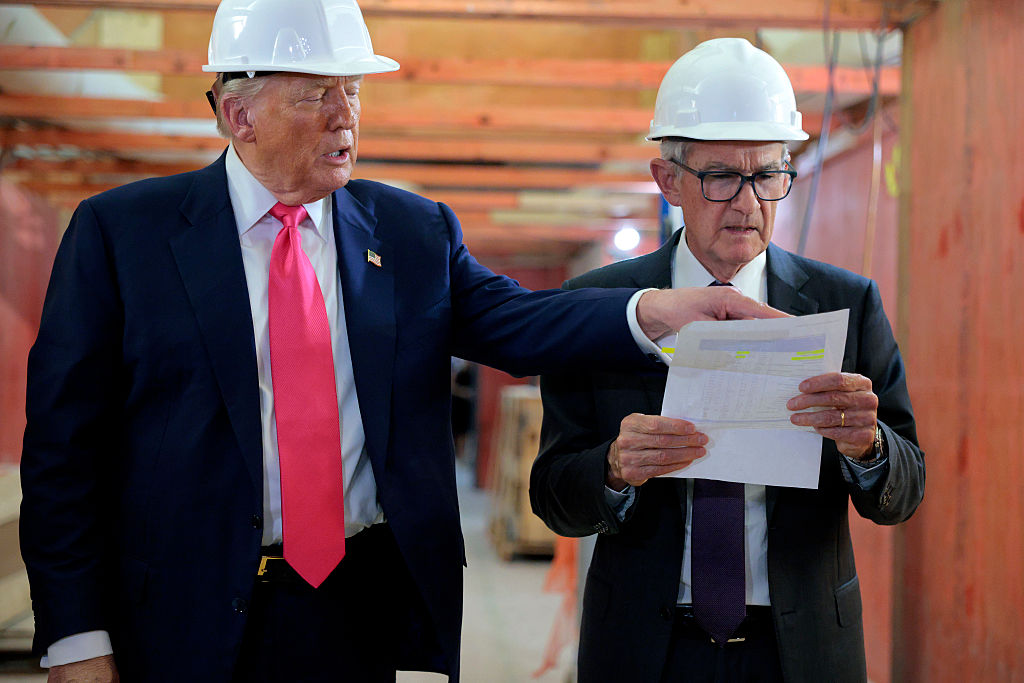 How Worried Should Investors Be About a Jerome Powell Investigation?
The Justice Department served subpoenas on the Fed about a project to remodel the central bank's historic buildings.
-
 Will Soaring Health Care Premiums Tank Your Early Retirement?
If you're under 65 and want to retire soon, your plan may be derailed by skyrocketing ACA marketplace premiums. Here's what you can do.
-
 5 Golden Rules We (Re)learned in 2025 About Investing
Some investing rules are timeless, and 2025 provided plenty of evidence demonstrating why they're useful. Here's a reminder of what we (re)learned.